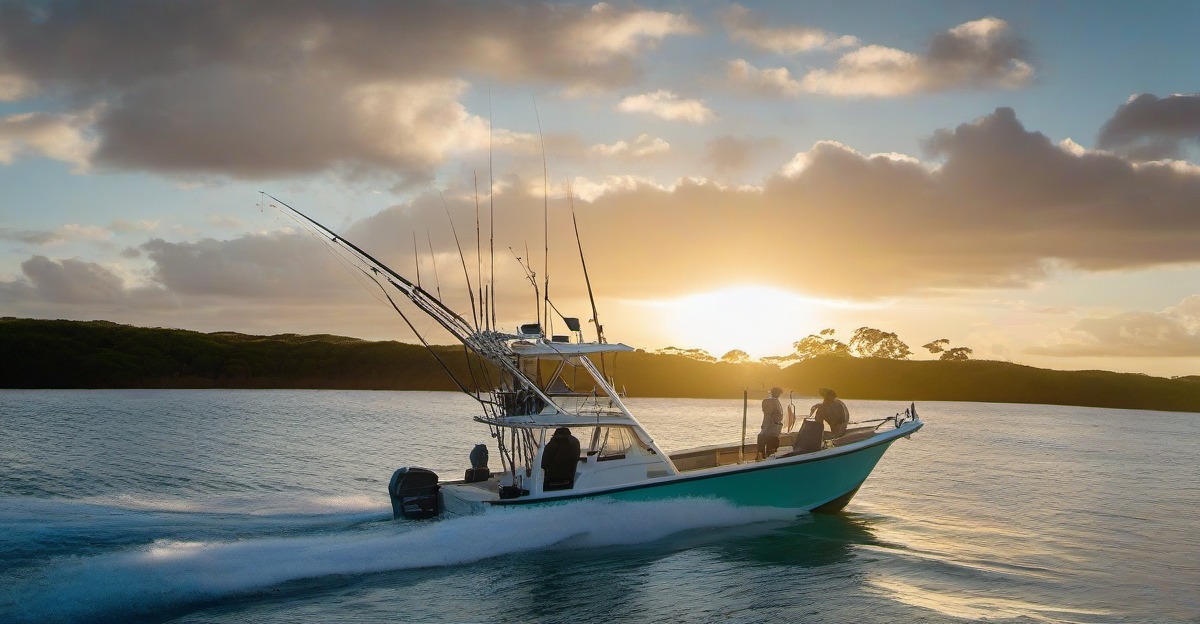
Barramundi Fishing Charters: Habitat, Seasons, and Tackle
By Pete Collins, Charter Operator and Fishing Guide
Understand what a dedicated barramundi fishing charter involves before you book.
Practical local guidanceAustralian charter focusNo paid placements
Reef and Rod earns a commission when you book through our Viator links, at no extra cost to you. We only link to experiences relevant to the fishing decision on this page.
The fish that rearranges your expectations
I've watched grown men go quiet on the drive home. Not because they got skunked, everyone gets skunked, but because they'd built the whole trip around a picture in their head, and the picture didn't survive contact with the fish. Barramundi does that. It's the most wanted sportfish in northern Australia and it earns the title by breaking hearts. A barra will follow your lure to the boat and turn away. It'll eat, jump once, throw the hook, and be gone before your brain catches up. The gills flare, the head shakes, and that's it, a silver flank in the tannin water and a slack line.
Here's the honest bit most charter pages won't lead with: catching a metre-plus barra is not a matter of picking the right boat. It's a matter of season, system, and timing. Get those three wrong and the best skipper in the Territory can't save your day. Get them right and you barely need a guide at all. So before you book anything, understand what you're actually chasing.
Closed seasons: the rule everyone skips
Barramundi have closed seasons, and they exist because barra spawn in the wet and the fishery would collapse without protection. The dates vary by jurisdiction and they change, so this is not a place to trust a mate's memory from three years ago. In Queensland the east-coast closure typically runs across the summer wet, roughly the start of November into early February, while the Gulf has its own dates. The Northern Territory runs a different system again, with barramundi management zones rather than a blanket ban. Western Australia has its own rules on top.
The point is not the exact dates, it's that you must check the current regulations for the specific water you're fishing before you go, every single time. A reputable charter won't take you barra fishing during a closure. If one offers to, that's your answer about the operator. Check the state fisheries website. Do it yourself. Don't outsource the one rule that can end a fishery.
The build-up: why October to December matters
Ask any northern angler when they'd fish for barra and most will say the build-up. That's the stretch from roughly October to December, before the monsoon proper, when the heat and humidity climb to genuinely oppressive and the whole country feels like it's holding its breath waiting for rain. It's miserable to stand around in. It's also when the fishing switches on.
The barra feed hard in the build-up, fattening ahead of the wet. Water temperatures are up, the fish are aggressive, and the big females are staging. This is the window that produces the trophy shots. It's no coincidence it butts right up against the closed seasons, the fish are gearing up to spawn. If you're picturing a big barra trip, October–December is the honest answer for a lot of the north, weather permitting. But understand what you're signing up for: 35-plus degrees, sweat you can't outrun, and afternoon storms building on the horizon. The best fishing in Australia is rarely the most comfortable.
Where the fish actually are
Barra live in a range of country: tidal rivers and creeks, snag-choked estuaries, coastal flats, and, famously, freshwater impoundments like Awoonga, Tinaroo, and Peter Faust, where stocking programs have produced genuine giants. Each fishes differently. Impoundment barra are a big-fish game of patience and electronics. Estuary and river barra are about tide, structure, and reading water.
Moon, tide, and timing
This is the part that matters more than the boat, and it's the part the brochure won't teach you. Barra are tide fish. They feed on moving water, the run-in and run-out around the tide change, when bait gets swept past ambush points and a barra can sit in the eddy behind a snag and eat without working. Slack water is dead water. If your trip lands on a small neap tide with barely any movement, the fishing can be genuinely tough regardless of who's driving.
The moon compounds it. The bigger tides around the new and full moons move more water and, in the build-up, often coincide with the better bites. Serious barra anglers plan trips around the moon phase and the tide chart first and the calendar second. So when you're picking dates, don't just ask "is the operator good?" Ask what the tides are doing that week. A mediocre spot on a cracking run-out tide beats a famous spot on dead water every time.
What a barra charter feels like (vs what you're picturing)
You're picturing a bent rod and a metre of silver held up against a sunset. What it usually feels like is casting a hundred times at the same snag, in heat that makes you question your choices, with long stretches of nothing punctuated by a single savage hit that you might well muff. Barra fishing is repetition and precision, landing the lure tight against structure, again and again, and staying ready for the one grab that comes when your attention's drifted.
The good days are extraordinary. But the average honest day is a couple of fish, a few missed strikes, and a story about the one that jumped off. If you show up expecting a fish a cast, you'll leave disappointed by a trip that was actually pretty good. Recalibrate before you go.
My verdict
Barramundi is worth every bit of the heartbreak, but only if you go in clear-eyed. Check the closed season for your exact water yourself, no exceptions. Aim for the build-up if you're after a real fish and you can handle the heat. Pick your dates by the tide and the moon, not just the operator. And if you've never done it, start with an estuary charter in the tropical north to learn what the fishing actually feels like before you invest in a dedicated trophy trip. Do that, and the picture in your head has a chance of matching the water. Skip it, and the fish will rearrange your expectations for you.
Reading the Water: Where Barra Hide in Plain Sight
You've heard about the build-up and the closed seasons. Now let's talk about where you'll actually find them. The Cairns Estuary System isn't just a pretty stretch of water—it's a State Marine Park and a critical nursery for juvenile fish. That means the barramundi you're chasing are sharing the water with deep holes, mudflats, snags, and drop-offs that hold more than just barra.
When you're out on a guided estuary trip, you're not just casting into open water. You're working structure. The same snags that hold javelinfish, fingermark, and mangrove jack are where barra ambush their prey. Estuary cod—both gold-spotted and black-spotted—hang around the same drop-offs. If your guide points to a submerged log or a bank of mangroves, put your lure there. The fish are stacked.
What to Bring: Gear That Matches the Environment
Northern Queensland heat is no joke, especially during the build-up. Here's what I tell every angler before they step onto a charter boat:
Sun protection: A wide-brim hat, polarised sunglasses (you'll spot the fish before they spot you), and SPF 50+ that won't wash off in the first sweat.
Hydration: Bring at least two litres of water per person. Most charters supply it, but don't rely on that alone.
Footwear: Non-slip, closed-toe shoes. The decks get slick, and the mudflats have oyster shells that'll slice through sandals.
Camera or phone in a waterproof case: That metre-plus barra won't wait while you fumble with a ziplock bag.
Light, quick-dry clothing: Long sleeves protect from the sun and the mozzies at dawn and dusk.
FAQ: Barramundi Fishing in Far North Queensland
Can I fish for barra year-round in the Cairns estuary?
No. The closed season in Queensland's east coast typically runs from the start of November into early February, but dates change. Always check the current QLD fisheries regulations before you book. A reputable charter will know the dates, but don't outsource that responsibility.
What other fish might I catch while targeting barra?
Plenty. The Cairns Estuary System holds javelinfish, fingermark, threadfin salmon (both blue and king), queenfish, several trevally species, mangrove jack, estuary cod, bream, flathead, hairtails, and even giant mudcrabs. Barra are the headline, but the supporting cast is strong.
Is the build-up really the best time for big barra?
Yes. October to December is the window when water temperatures rise, the fish feed aggressively ahead of spawning, and the big females stage in the estuaries. It's hot, humid, and uncomfortable—but that's when the trophy shots happen.
Can I combine a barra trip with a Great Barrier Reef day out?
Absolutely. Many anglers fly into Cairns, fish the estuary for a day or two, then head to the reef. Operators like Divers Den run full-day trips to Norman, Saxon, or Hastings reefs—about 90 minutes from Cairns—where you'll see turtles, stingrays, and lively coral. If you've got more time, overnight liveaboard options let you hit premium outer reef sites and still get back for another estuary session.
Vibrant corals, turtles, stingrays, reef fish (snorkelling/diving)
Best For
Anglers focused on sportfishing and estuary structure
Snorkellers, divers, and those wanting coral and marine life
Water Type
Estuary creeks, mudflats, deep channels, snags
Outer reef sites (Norman, Saxon, Hastings reefs)
Seasonal Notes
Closed season Nov–Feb (check dates); build-up Oct–Dec is prime
Operates year-round, weather dependent
If you're chasing barra, stick to the estuary. If you've got a non-fishing partner or want a change of pace, the reef trips offer a completely different experience—and you'll both come home with stories.
Matching Your Barra Trip with the Right Estuary System
You've heard the build-up is the prime window, but where you drop a line matters just as much as when. The Cairns Estuary System is a State Marine Park, and it's not just a pretty stretch of water—it's a critical nursery for juvenile fish. That means the deep holes, mudflats, snags, and drop-offs you'll find there are holding structures that barramundi use year after year. When you're booking a charter out of Cairns, you're not just fishing open water; you're working a system that's biologically designed to concentrate fish.
Don't make the mistake of thinking all estuary trips are the same. The Cairns Estuary System is a mosaic of habitats. One creek might hold barra staging in a deep hole, while the next flat over is thick with threadfin salmon or queenfish. A good skipper will read the tide and move you between these zones. If you're after a metre-plus barra, you want a guide who understands how the fish use the snags and drop-offs during the run-out tide—that's when the big girls get pinned against structure and become vulnerable to a well-placed lure.
What to Bring for an Estuary Barra Session
Northern Queensland sun is relentless, even in the build-up. Here's the kit you shouldn't leave on the dock:
Polarised sunglasses – You need to see the snags and the fish before they see you. Cheap glasses won't cut it.
Buff or neck gaiter – The sun reflects off the water and burns everything exposed. You'll thank me by lunch.
Lightweight, quick-dry clothing – Long sleeves and pants, even in the heat. It's your best defence against sun and mosquitoes.
Stout shoes with grip – The decks get slick, and the banks are full of mangrove roots and mud oysters. Thongs are a bad idea.
Reef-safe sunscreen – You're fishing in a Marine Park. Standard sunscreen damages the system you're there to enjoy.
Your own pliers and a rag – Barra have razor gill plates. If you hook one, you want to handle it quickly and get it back in the water.
Frequently Asked Questions About Barra Fishing in the Cairns Region
Can I combine a barra fishing trip with a Great Barrier Reef day tour?
Yes, but not on the same day. The Cairns Estuary System and the outer reef are completely different environments. If you have time, book a dedicated estuary barra session (the 270-minute option gives you a solid window on the tides), and on another day take a full-day reef tour like the one that visits Norman, Saxon, or Hastings reefs. That way you get the best of both worlds without rushing either experience.
What other species might I catch while targeting barra in the estuary?
The estuary system holds a mixed bag. Depending on the season and tide, you can hook into fingermark, mangrove jack, golden-spotted or black-spotted estuary cod, flathead, trevally species, queenfish, and both blue and king threadfin salmon. If you're lucky, you might even pull up a giant mudcrab in a pot. It's not uncommon to have a day where you catch five different species before you land your first barra.
Is the estuary fishing suitable for beginners or families?
Absolutely. The Cairns Estuary System offers protected waters that are far more forgiving than open ocean. The 270-minute tours are well-suited for anglers of all skill levels. That said, barra are still barra—they'll test your gear and your patience. If you're bringing kids or beginners, let the guide know ahead of time so they can set up lighter tackle and target more cooperative species like bream or flathead to keep everyone engaged.
Do I need a fishing licence for estuary barra fishing in Queensland?
Yes. Queensland requires a recreational fishing licence for barramundi. Your charter operator should be able to advise you, but it's your responsibility to have one before you step on the boat. Check the QLD fisheries website for current fees and regulations. A reputable charter will ask to see it before you leave the dock.
Hook-a-Barra Gourmet Farm Tour
★★★★ 4.8 (26 reviews) · 70 min
Some links may be affiliate links, which means we may earn a commission at no extra cost to you. We take no paid placements.
Visit The Daintree Saltwater Barramundi Farm and discover the journey from fingerling to finger food.