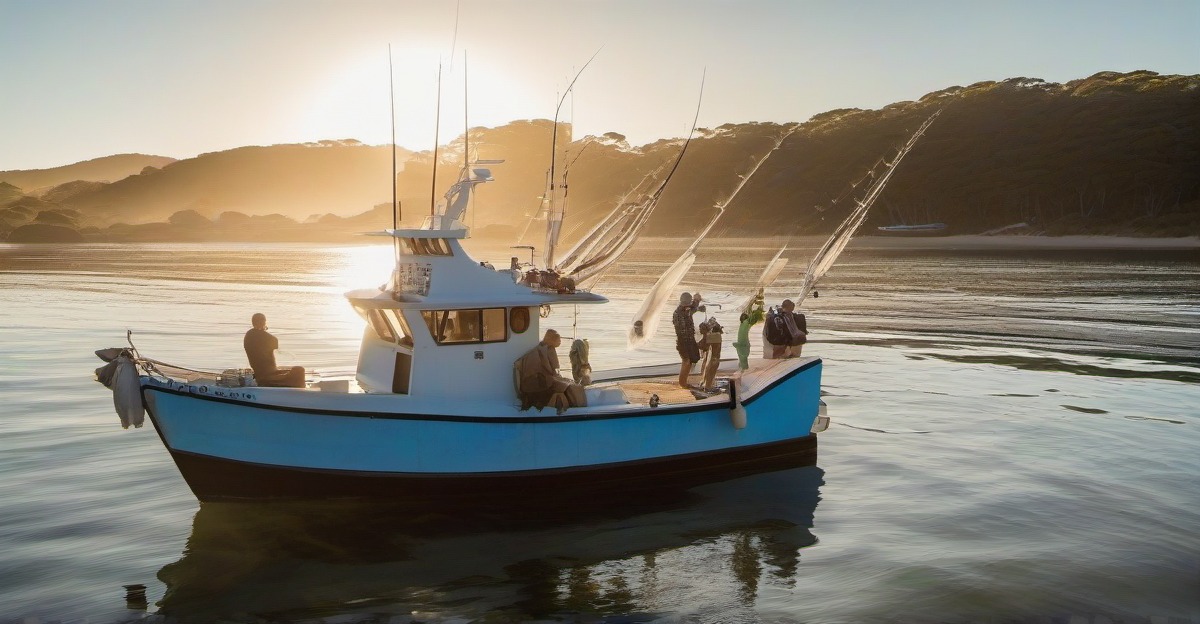
Reef & Rod earns a commission when you book through our Viator links, at no extra cost to you. We only link to experiences relevant to the topic on this page.
Start with the format
The half-day versus full-day question is really a question about how much water you want between you and the ramp by lunchtime. A half-day trip usually runs four to five hours and keeps you inside the estuary systems or on the closer inshore reefs. A full day, eight to ten hours, buys you the range to punch out to the shelf or the outer ribbons where the better fish live. Both catch fish. They just catch different fish, in different moods, for different money.
My rule of thumb: if you have anyone in the group who has never fished offshore, start with a half day. You learn quickly whether they get seasick before you have committed them to nine hours of it.
What the water changes
Wind and tide dictate more than the brochure ever will. A half-day booking gives the skipper flexibility. If it blows 20 knots from the southeast, which it does far too often between May and September, a half-day crew can tuck into the lee of a headland or work the Trinity Inlet drains and still put fish in the esky. A full-day boat committed to the outer reef in that same wind is a punishing, wet, green-faced experience.
I learned this the expensive way off Cape Kimberley a few winters back. Booked a full day, watched the forecast slide from 12 knots to 25 overnight, and spent the run out clinging to the gunwale while the deckie handed out ginger tablets like they were lollies. We caught fish. Nobody enjoyed it.
Water clarity shifts the plan too. After summer runoff from the Barron and the Daintree, the inshore turns coffee-coloured and the fish move. A good half-day skipper adjusts inside twenty minutes. On a full day you have already burned fuel getting somewhere, so the pressure to make it work is higher, which is not always a recipe for good decisions.
Species and timing
Coral trout, red emperor, large-mouth nannygai and the odd sweetlip are a different proposition. Those live on the outer structure, and getting to good ground eats two hours each way. That is a full-day job, no argument. My best red emperor, a solid 8 kilos, came at slack water over rubble ground about 40 kilometres out, and we would never have reached it on a half-day clock.
Timing inside the day matters as much as the season. Dawn departures beat mid-morning ones almost every time, because the fish feed on the tide change and the wind usually builds through the afternoon.
Equipment and comfort
Most reputable Cairns and Port operators supply rods, reels, rigs, bait and ice in the price. Confirm it, but assume it. What they rarely mention is the comfort side, and that gap hurts more on a full day. A half-day boat can get away with basic shade and a chilly bin. On a full day you want a proper head (a toilet), a shaded cabin, and somewhere to sit that is not a milk crate.
Bring your own polarised sunglasses, reef-safe sunscreen, a long-sleeve fishing shirt, and more water than you think. I carry a soft cooler with electrolyte sachets because dehydration is what actually ends most people's day offshore, not the fishing. Seasickness tablets go in the night before, not on the ramp.
Questions to ask before you book
Ring the operator, do not just click the booking button. The phone conversation tells you more about a charter than any listing. Ask what the ratio of anglers to crew is. Four to one is workable; ten to one means you will spend the day untangling your own bird's nests. Ask whether it is a private or shared boat, because a shared full day with a slow-learning group can feel very long.
Confirm the cancellation policy and the wind threshold at which they will not run. Reputable operators call it off rather than risk a miserable, unsafe day, and the good ones offer a reschedule rather than pocketing your deposit.
My practical verdict
Match the trip to your real priority, not to the most impressive photo on the listing. If the goal is a relaxed morning, a feed of fish, and kids or newcomers who stay keen, book the half day and be back at the pub by two. If the goal is serious table fish off the outer reef and you have a crew with sea legs, commit to the full day, accept the fuel cost, and pick your weather window rather than your calendar date.
The mistake I see most often is people booking a full day because it feels like better value per hour, then losing three of those hours to travel and wind. Value is fish in the esky and people who want to come again, not raw time on the water.
I've run both half-day and full-day charters for going on fifteen years now, and I'll tell you what the brochures won't: they're not the same trip cut in half. They're different trips entirely, and picking the wrong one is the most common mistake people make when they book.
Here's what actually happens on a four-hour charter. You steam out for 30 to 45 minutes, because the good ground isn't at the marina. That's your first chunk gone. Then you've got maybe two and a half hours of actual fishing before we need to turn around. On a good day with the fish biting close in, that's plenty. On a slow day, it means I get one, maybe two shots at moving spots before we're out of time. If the first spot's dead and the second spot's dead, that's your morning. A half-day charter is a bet that the fish are where I think they are, and most days I win that bet, but not every day, and no skipper who tells you otherwise is being straight with you.
A full day changes the maths completely. Eight hours means I can run to the grounds that are genuinely better, the wider reefs, the deeper wrecks, the spots that don't get hammered by every tinny in the postcode. It means if plan A isn't working, I've got plans B through E and time to use them. It means we can fish the tide change, which is often when the whole day turns on. The fish you catch on a full day aren't just more numerous, they're usually bigger, because the better fish live further out. That's not marketing, that's just where they live.
Cost-wise, you'll typically pay somewhere between 60 and 70 percent of the full-day price for a half day. So the full day is objectively better value per hour of fishing, you're doubling your fishing time for maybe 40 percent more money, because the steaming time and fuel to get out there gets paid either way. If value is what you're chasing, the full day wins and it's not close.
But value isn't everything, and here's where I'll talk a few of you out of the full day. If you've got kids under about ten, book the half day. I don't care how keen your eight-year-old is at 7am, by hour five they're sunburnt, bored, and asking for the iPad, and now you're paying premium money to manage a meltdown 20 kilometres offshore. Same goes if anyone in your group hasn't tested themselves for seasickness. Four hours of feeding the fish over the side is survivable. Eight hours is a story your mates will tell at your funeral.
The half day is also the right call for people who want a taste, a fun morning, a feed of fresh fish, back at the pub by one. That's a great day out and there's no shame in it. Most of my repeat family customers do exactly this every school holidays.
For the serious anglers, the ones asking me about specific species and moon phases before they've booked, you already know the answer. Book the full day. Better yet, book the full day midweek when the grounds are quiet. The blokes who catch the fish of a lifetime on my boat are almost never on the four-hour run, and that's not because I try less hard in the morning. It's because time on the water is the one thing you can't fake, buy back, or make up for with expensive gear. Give me eight hours and I'll give you a proper crack at something worth photographing.
Explore More
Related guides and comparisons:
What to Pack for Your Time on the Water
I’ve watched too many first-timers step off the dock in Cairns with nothing but a towel and a tube of sunscreen. That works for a half-day inside the estuary, but if you’ve booked one of the full-day outer reef trips—like the 510-minute run out to Norman, Saxon or Hastings reefs—you need to treat it like a day in the sun you cannot escape.
Every reputable operator, including Divers Den and the crews running the all-inclusive scuba trips, supplies rods, reels, bait and ice. What they don’t supply is your own comfort kit. Here’s what I tell my clients before they board:
- Motion sickness tablets. Take them 30 minutes before departure, not when you feel the first roll. The run from Cairns to the outer reef is about 90 minutes, and the ocean doesn’t care about your breakfast.
- A rashie or long-sleeve shirt. The tropical sun reflects off the water and burns exposed skin twice as fast. You’ll be snorkelling or diving at two different reef sites—that’s hours of direct exposure.
- A dry bag. Even on a modern vessel like AquaQuest with its spacious deck and hot showers, spray gets everywhere. Keep your phone, keys and spare clothes sealed.
- Your own mask. Operators supply gear, but a mask that fits your face makes the difference between seeing turtles and stingrays clearly or fighting a leak the whole time.
Timing Your Trip: Dawn Departures and Seasonal Swings
The page already covers wind and tide, so I’ll add what the tour descriptions tell us about the clock. Most full-day outer reef trips from Cairns run about 510 minutes—roughly eight and a half hours from dock to dock. That includes the 90-minute transit each way, plus time at two separate reef sites. The all-inclusive scuba trips often start with a breakfast egg and bacon roll, then serve a BBQ lunch onboard, and finish with crackers, cheese and a glass of wine on the return cruise.
If you’re weighing a half-day against a full day, consider this: the full-day boats leave early—often before 7:00 AM—because the fish feed on the tide change and the wind builds through the afternoon. A half-day trip that departs mid-morning loses that prime bite window. My advice: whatever format you choose, pick the earliest departure available.
Seasonally, the water clarity between May and September is usually better on the outer reefs. After summer runoff from the Barron and Daintree rivers, the inshore turns milky, but the outer sites like Hastings and Saxon reefs stay clear. That’s when you’ll spot the turtles and stingrays the brochures promise.
Frequently Asked Questions
Are meals included on full-day reef trips?
Yes. The full-day tours described in the source material include a buffet lunch or BBQ lunch prepared onboard. The all-inclusive scuba trip also provides a breakfast egg and bacon roll in the morning and crackers, cheese and a glass of wine on the return cruise. Always confirm with the operator, but assume you won’t go hungry.
Can I do a full-day reef trip if I’m not a strong swimmer?
Absolutely. Most vessels, including AquaQuest and OceanQuest, have easy water access points, spacious decks, and crew who assist nervous swimmers. Snorkelling is the default activity, and life vests are provided. The introductory scuba dive option on many trips is supervised one-on-one and requires no prior experience—just a medical check.
What happens if the weather turns bad?
The skippers make the call. On a full-day trip, if the wind blows 20 knots from the southeast—common between May and September—the boat may shift to sheltered reef sites or adjust the itinerary. The tour descriptions note that reef sites are “weather dependant.” If conditions are dangerous, the operator will cancel or reschedule. Always check the forecast the night before and call the booking office if you’re unsure.
Is a liveaboard worth it compared to a full-day trip?
If one day isn’t enough, the 2-day snorkelling experience on OceanQuest gives you evenings on the reef, air-conditioned cabins with en-suite bathrooms, and access to premium outer sites after the day-trippers have gone. It’s a different experience—more relaxed, more time in the water, and you avoid the 90-minute commute twice. But it costs more and requires more planning. For most first-timers, a full-day trip is the sweet spot.
What to expect from a full-day reef charter
If you've decided a full day is your go, you want to know what you're actually stepping onto. Most of the reputable Cairns operators running outer reef trips—like the ones aboard modern vessels such as AquaQuest or the 35-metre catamarans I see tied up at the Marlin Marina—are purpose-built for comfort and range. You're not on a tinnie. You're on a proper platform with a spacious deck, easy water access, and state-of-the-art equipment. Hot showers after a swim? Yes, that's standard on the better boats. A buffet lunch? You bet, usually served between the morning and afternoon reef sessions.
The typical full-day gig runs about 510 minutes—that's eight and a half hours from dock to dock. You'll visit two exclusive reef sites, often on the Norman, Saxon, or Hastings reefs, which are about 90 minutes steaming from Cairns. That leaves you a solid five-plus hours on the water, split between two locations. The skippers rotate spots based on tide and wind, and I've seen turtles, stingrays, and the occasional reef shark on almost every trip out there.
When a single day isn't enough
Let me be straight with you: sometimes four or five hours on the reef leaves you wanting. That's where the overnight liveaboard option comes into its own. Vessels like OceanQuest are floating boatels—three decks, air-conditioned cabins with en-suite bathrooms, a lounge bar to wind down in after dark. You get the premium outer reef sites at sunrise and sunset, when the fish are most active and the crowds from the day-trippers have gone. It's a different world. If you're serious about your snorkelling or diving, and you want to cover more ground without burning two hours each way in transit, the two-day twin-share option is worth the stretch.
What to bring and how to prepare
I've watched too many first-timers step off the dock looking like they're headed to the mall. Here's the short list from someone who's been wet, sunburnt, and sorry:
- Motion sickness tablets – take them the night before and again at breakfast. The skippers hand out ginger tablets like lollies, but prevention beats cure. If you're unsure, start with a half-day to test your sea legs before committing to nine hours.
- Rashie or long-sleeve sun shirt – the tropical sun off Cairns is brutal. You'll be reflecting off water for hours. Sunscreen washes off; a good rashie doesn't.
- Reef-safe sunscreen – most operators require it, and for good reason. The reef is alive. Keep it that way.
- Towel and a change of clothes – you'll get salt on everything. Hot showers are available on the better boats, so you can rinse off before the ride home.
- Camera or waterproof housing – the coral gardens on Norman and Hastings reefs are some of the healthiest I've seen. You'll want proof.
Frequently asked questions from anglers and snorkellers
Do I need my own fishing or snorkelling gear?
No. Every full-day reef trip from Cairns I've seen includes all equipment—masks, fins, snorkels, and for the dive-inclusive trips, full scuba gear. Fishing rods and bait are standard on the fishing-specific charters. Just bring yourself and a sense of adventure.
What happens if the weather turns bad?
The skippers have contingency plans. They'll swap to sheltered reef sites on the lee side of the ribbon reefs or inside the lagoon. If it's genuinely unsafe, they'll cancel or reschedule. I've been on boats that tucked into Hastings Reef when the southeast blew 25 knots, and we still had a solid day. Trust the crew—they know these waters.
Can beginners do the full-day reef trip?
Absolutely. Most operators cater to all levels. The introductory dive option on many tours includes a 20-minute guided dive for first-timers, and the snorkel sites are shallow enough that you can float and watch the coral without any training. Just let the crew know your experience level when you board.
Is the overnight trip worth the extra money?
If you're serious about the reef, yes. You get sunset and sunrise on the water, fewer boats around, and the chance to explore sites the day-trippers never see. The cabins are air-conditioned, the meals are included, and you wake up already on the reef. I've done it twice—once for the fishing, once just to watch the stars from the top deck. It's a completely different pace.