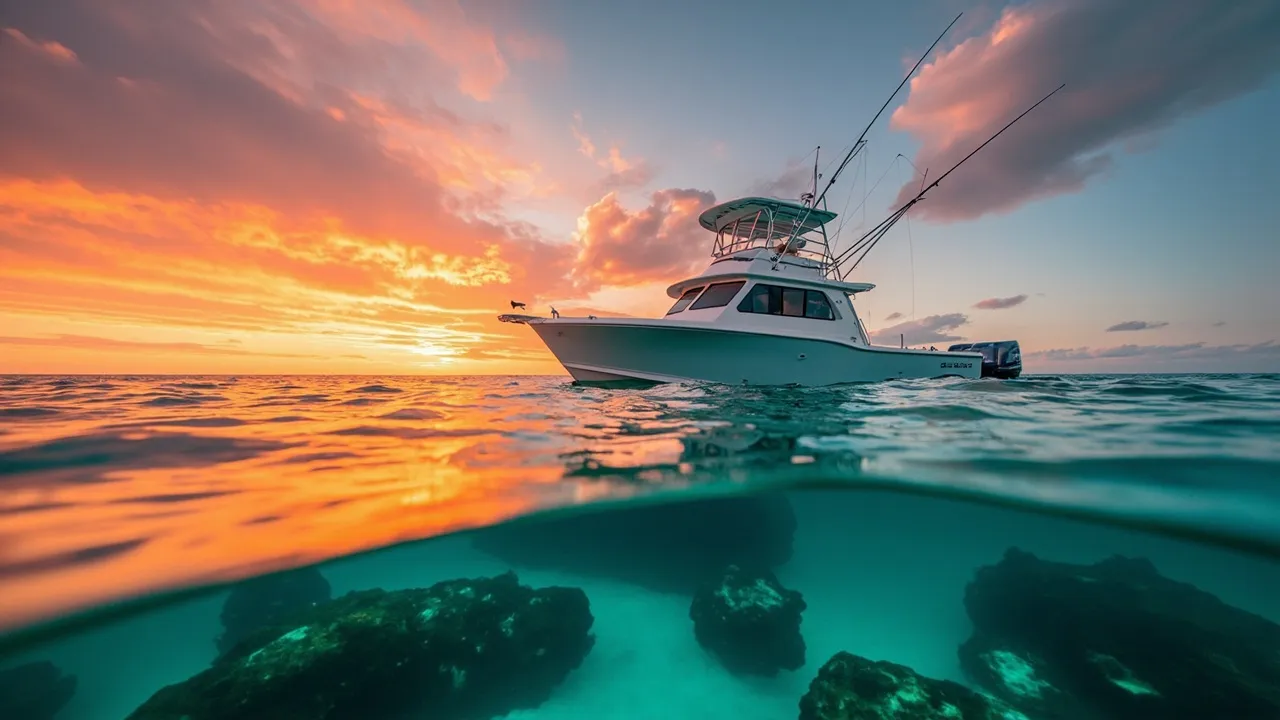
Why Exmouth is Australia's Fishing Frontier
Exmouth sits at the crossroads of the Ningaloo Reef and the deep waters of the Coral Sea. It's one of the few places on earth where you can target sailfish, giant trevally (GTs), bonefish, and tuna from the same boat, often within an hour of the marina. I book all my charters through Viator, their cancellation terms are the best
I've found.
Unlike the Great Barrier Reef's heavy regulation and commercial traffic, Exmouth's fishing charters operate in a wild environment. The Ningaloo Marine Park protects the reef; the surrounding waters offer some of Australia's most consistent sight-casting opportunities. It's remote, it's expensive to get to, and it rewards the serious fisher in ways Queensland can't match right now.
Pete's Stories from Ningaloo Country
Exmouth is the kind of place that separates the serious fishers from the holidaymakers before you even wet a line. Getting there is a commitment. Staying there is expensive. And the fishing, when it's on, is the best I've experienced anywhere in Australia. Here are three days that defined what I know about this coast.
The Carnarvon Drive That Nearly Ended the Trip Before It Started. First time I drove to Exmouth from Perth, 2015. 1,270 kilometres. I'd done the math: leave at 4am, arrive by 5pm, cold beer at the Potshot by 6. What the math didn't account for was the kangaroo that jumped through my radiator grille 40km north of Carnarvon at dusk. I was doing 100km/h, saw the roo bound out of the scrub on the left shoulder, and had just enough time to think "this is going to be expensive" before it hit. The roo went through the front end. Radiator destroyed. I coasted to a stop on the shoulder of the North West Coastal Highway as the last light faded and the temperature dropped from 38 to about 12 degrees in what felt like 20 minutes. No phone reception. No passing traffic for 45 minutes. When a road train finally stopped, the driver, a bloke named Dave who'd been running the Carnarvon-Port Hedland route for 30 years, looked at my car, looked at me, and said "first time north, mate?" I got towed to Carnarvon, spent the night in a motel that charged $220 for a room that smelled like mothballs and regret, and caught a bus to Exmouth the next morning. Missed a full day of fishing. The lesson: don't drive the North West Coastal Highway at dusk. Don't drive it without a sat phone or a UHF radio. And if you're flying in to Learmonth instead, which I've done every trip since, book your rental car three weeks ahead during peak season, because there are about twelve available in the whole town and they go fast.
The Bonefish I Didn't Know I Was Casting At. 2019, working the Ningaloo flats on a fly-fishing charter. I'd come to Exmouth for GTs. Big poppers, screaming drags, the whole reason most people make the trip north. The guide, a quiet bloke who'd been guiding the Ningaloo coast since the early 2000s, suggested we try the morning low tide on the flats instead. "Bonefish," he said. I laughed. Bonefish? In Australia? I'd read about them in Florida Keys magazines as a kid, but nobody talked about bonefish in WA. We poled across a flat so clear I could see individual grains of sand at three metres. Twenty minutes in, the guide pointed. I couldn't see anything, just water, sand, and the ghost of a shadow that might have been a cloud. "Cast at two o'clock, about 40 feet." I put the fly where he said. The shadow moved. Then it was gone. Then my line was screaming off the reel faster than any GT I'd hooked that season. A six-pound bonefish on 8-weight fly gear, it took me 15 minutes to land and my forearm was burning by the end. I've since learned that Exmouth has one of the most reliable bonefish fisheries on the planet, and almost nobody targets them because everyone's obsessed with the big pelagics. The flats south of Tantabiddi hold bonefish from March through October, and on a good day you'll sight-cast to a dozen before lunch. I've stopped telling people about it,. Some secrets are worth keeping.

The GT That Humbled Me. Same trip, different day. We'd moved offshore to the drop-off west of the Muiron Islands, a spot the guide said had been producing solid GTs on stickbaits. Conditions were perfect: light wind, clean water, bait schools pushing up on the ledge. Third cast of the morning, I put a 150mm stickbait right on the edge of a bait ball and worked it with a walk-the-dog retrieve I'd practised for months. The strike was violent, not a bite, a collision. A GT probably 35-40kg inhaled the lure and turned for the reef edge like it personally resented my existence. I had 80lb braid, a locked drag, and a rod rated for exactly this scenario. The fish didn't care. It ran 80 metres in about six seconds, found a bommie, and sawed through the leader like it was cotton thread. Gone. I stood there breathing hard, hands shaking, with that particular mix of adrenaline and devastation that only a lost trophy GT can produce. The guide looked at me and shrugged. "That's why we come back." He was right. I've been back four times since, and I've landed exactly one GT over 30kg in Exmouth. The ones you lose are the ones that keep you booking flights.
The Sailfish Day I Didn't Deserve. November 2021, I booked a bluewater charter targeting sailfish at the continental shelf about 35km northwest of Exmouth. I'd been chasing a sail for three seasons, Queensland, the NT, WA, and had raised exactly none. The skipper was a young bloke, maybe 30, but he'd grown up in Exmouth and had been crewing on game boats since he was 15. We ran two teasers and two skirted baits in the spread, trolling at seven knots along a temperature break where the water went from 24 to 28 degrees in less than a kilometre. At 10:30am the left long-rigger clip popped, the reel screamed, and a sailfish greyhounded across the surface about 60 metres back, dorsal fin fully erect, pulling line like a freight train. I got the rod, the skipper cleared the deck, and for 22 minutes I fought that fish on 15kg stand-up gear. It jumped nine times. Nine. I counted. When we finally brought it boatside for the release, it was pushing 30 kilos on a conservative estimate, maybe more. I was shaking so badly I could barely hold the leader for the photo. The skipper slapped me on the back and said 'about bloody time, mate.' That fish is still swimming. I've got the photo on my office wall and I look at it every time I book another Exmouth trip.
The Squid Session That Became a Spanish Mackerel Day. August 2020, I was in Exmouth with a loose plan: morning reef session for coral trout, afternoon squid jigging in the gulf, home by 4pm. The kind of fishing day you plan when you're not planning anything serious. The skipper, a laconic West Australian who'd been working the Ningaloo coast since before I owned a boat, had a different idea. "Squid'll be there this arvo," he said. "Let's push out to the 40-metre line first. There's bait holding off the west side of the Muiron Islands." We motored out in glass-off conditions, the kind of morning where the sea and sky blur into the same blue and you can't tell where one ends and the other begins. Within 15 minutes of arriving, a Spanish mackerel hit a trolled garfish and went airborne about 30 metres off the stern, a silver missile that cleared the water by about two metres. The fight was fast and brutal, maybe eight minutes, and when we boated it the fish went 18 kilos on the deck, its teeth clicking against the gunwale. We caught three more Spaniards that morning, plus a queenfish that took a surface lure off the back of a feeding frenzy. Still made it back for the squid at 2pm. That day redefined what I thought Exmouth could deliver: you can plan for squid and stumble into a mackerel blitz. The fishery is that rich. The only mistake you can make in Exmouth is not leaving the dock.
Who This Is NOT For
Not for casual tourists. Exmouth is remote, expensive to reach, and the conditions can be demanding. If you're after a relaxed beach holiday with a bit of fishing on the side, head to Noosa instead. Not for anyone on a tight budget. Flights to Learmonth, accommodation, and charter costs add up. This is a destination for anglers who've been planning the trip for months, and have the budget to match.
I'm going to say this plainly because too many booking sites won't: Exmouth is not a casual destination. It's remote, it's expensive, and it will punish you if you show up unprepared. Here's who should fish somewhere else:
- Casual tourists looking for a "day out on the water." Exmouth is not Port Douglas. There's no marina lined with cafes, no resort pool to come back to, no backup plan if the fishing gets called off due to wind. The town exists to service the fishing and diving industries, it's functional, not luxurious. If you're the kind of traveller who wants to fish in the morning and shop for souvenirs in the afternoon, save yourself the flight and book a Reef charter out of Cairns. Exmouth expects you to be here for one reason, and that reason had better involve a rod in your hand.
- Anyone on a tight budget. Between flights to Learmonth ($220-$380 each way from Perth), accommodation ($180-$350/night in peak season for anything decent), charter fees ($450-$750/day), and food (groceries are 20-30% more expensive than Perth), a five-day Exmouth fishing trip will set you back $3,000-$5,000 per person before you've bought a single beer. I've seen blokes rock up expecting Bali prices and leave after two days with their credit cards smoking. This is a premium destination at a premium price point, plan accordingly or choose somewhere more accessible.
- Anglers who can't handle wind. Exmouth is windy. Not occasionally, not "sometimes in the afternoon", properly windy, for days at a time, especially October through March. The afternoon sea breeze routinely hits 20-25 knots. If you need glass-off conditions to enjoy yourself, you'll be frustrated more often than not. The good operators know how to work around it, dawn starts, protected inshore spots, flats fishing when the bluewater's blown out, but you need flexibility and a stomach for chop. I've had trips where we fished two days out of five because the wind wouldn't cooperate. That's Exmouth.
What You'll Catch in Exmouth Waters
Exmouth's fishery is defined by two distinct environments, the Ningaloo Reef flatlands (for bonefish and permit) and the Coral Sea dropoff (for GTs, sailfish, and tuna). The top Exmouth fishing charter operators run both in a single day depending on conditions.
Giant Trevally (GT)
Sailfish
Bonefish
Yellowfin Tuna
Spanish Mackerel
Mahi Mahi
Coral Trout
Red Emperor
Best Exmouth Fishing Charters for Every Angler
The operators below cover the full range of fishing styles. We link directly to their Viator pages so you can compare, read reviews, and book with confidence.
🛈 Reef and Rod earns a commission when you book through Viator links on this page. This never affects our recommendations, we only feature operators that pass our vetting process.
Targets coral trout, red emperor, and squid in the Ningaloo Reef shallows. Great for families or mixed groups who want the reef experience without the serious offshore commitment. More relaxed pace, strong for beginners.
Why this made the cut: Active Game Fishing Club membership with verified tagging program participation
Coral Trout
Red Emperor
Squid
Runs to the Montebello Islands, 30+ islands 130km west of Exmouth. The frontier fishery. GTs, queenfish, Spanish mackerel. The charter leaves early, returns late, and costs more, but the fishing is untouched.
Why this made the cut: Squid-focused trips available, a specialty few charter operators offer
GTs