Darwin Full-Day Barra Fishing Charter
Full-day · Tidal Rivers · Darwin Area
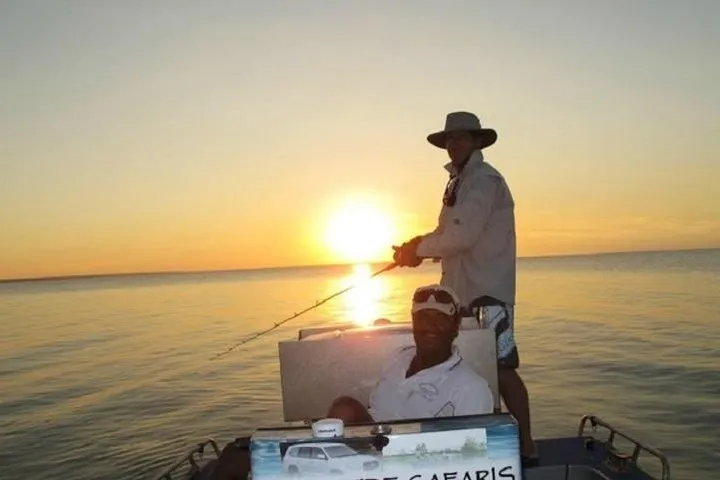
Guided barra fishing targeting the tidal rivers and estuaries within 60–90 minutes of Darwin CBD. This full-day operation works both freshwater and saltwater barra environments depending on water conditions and seasonal patterns. The operator targets barra with lure and soft plastic techniques in clear tidal water. Gear, bait, and NT fishing licence included. Best suited to fishers with prior lure-casting experience, confirm with operator if you're a complete beginner.
Why this made the cut: Proven track record with beginners, crew actively teaches first-timers
Rate: From $350/person · Full-day · Min 2, max 4 anglers
Barramundi and Bluewater Safari, Multi-Day NT Safari
Multi-day · Tidal Rivers + Offshore · Darwin Base
Spring Tide Safaris' flagship multi-day Barra and Bluewater Safari operates from a Darwin base with access to multiple NT fishing environments. The 2–4 day packages include resort accommodation, all meals, gear, bait, and fishing licence. Day 1 focuses on barra in the tidal river systems; Day 2 targets bluewater species (GT, queenfish, trevally) on the offshore reef sections. Transfers from Darwin CBD included. This is a proper wilderness fishing experience, not a city-based half-day operation. Minimum 2 anglers per booking.
Why this made the cut: Multi-day format accesses remote grounds single-day charters can't reach
Rate: From $1,200/person · Multi-day packages (2–4 days) · All-inclusive
Hooked on Barra, Land-Based Barramundi Fishing
Half-day · Land-Based · Darwin Area
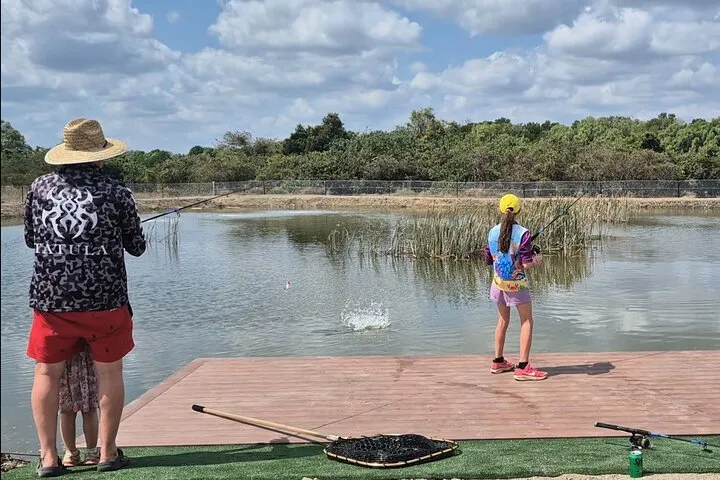
A land-based barra fishing experience operating from the Darwin area. This session targets barra in the tidal water networks accessible from shore, fishing from stable platforms or the riverbank rather than from a boat. The operation is accessible to fishers who don't want a full-day boat trip and provides a genuine barra experience without the cost of a full charter. Children from age 5 can participate. Gear provided; confirm what to bring before departure.
Why this made the cut: Unique land-based barra experience, accessible from shore, children from age 5 welcome
Rate: From $180/person · Half-day · Children from age 5
Barramundi Fishing Techniques, What the Guides Use
Barramundi fishing in the NT is primarily a lure and soft plastic game, the tidal water clarity and the fish's feeding behaviour make visual, lure-driven techniques most effective. Here's what the guides use:
- Vibes and blade baits, The go-to for stained water and deeper holes. A 1/2–3/4 oz vibrating jig worked slowly along the bottom near structure. In the coloured water of the Darwin region rivers, vibes consistently outfish other lure types during the wet season run-off.
- Soft plastics (Gulp, Zman, Berkley Gulp), 4–6 inch plastics on 1/4–1/2 oz jig heads. Work slowly along weed edges, fallen timber, and the drop-off edges of tidal channels. The Gulp range in bream colours (pearl, pink, guru) are the standard barra plastics. Rig on a 3/0–4/0 offset worm hook for weedless presentation.
- Topwater lures, In clear tidal water during the dry season, a well-presented surface lure produces explosive strikes. Classic barra surface lures include the Bassday Sugarshad, GC45, and various walking baits. Cast to visible structure (fallen trees, lily beds, creek mouth eddies) and work with sharp, short twitches to create the characteristic barra surface smash.
- Trolled lures, For covering water in deeper tidal rivers, a trolled 3–5 inch minnow pattern (Rebel, Rapala) at 3–4 knts along channel edges and dropoffs. Less visual than topwater but effective in stained water where visibility is limited.
- Live bait, Some operators use live mullet or freshwater yakka as bait, either beneath a float or on a running rig. Live bait is most effective during the post-wet season when barra are in the main channels and feeding aggressively before the dry season slowdown.
Rod and reel recommendations: A 7–8 foot medium-light barra rod matched to a 3000–4000 spinning reel loaded with 20–30lb braid is the standard NT barra setup. Leaders are usually 30–40lb fluorocarbon, 2–3 feet long, with a 3/0–5/0 inline circle hook or offset worm hook depending on the technique. Confirm with your guide before bringing gear, the operator will have appropriate tackle if you're unsure.
October 2019, Corroboree Billabong. I was casting a white soft plastic along the lily pads for about two hours without a touch. The guide, a Territory local who'd been working that billabong since before I owned a fishing rod, told me to switch to a small gold Bomber. I resisted. I'd spent $40 on those plastics and I was determined to make them work. He shrugged and kept poling the boat. Another hour passed. Nothing. Finally, out of frustration more than belief, I tied on the Bomber. First cast into the shade of an overhanging paperbark, explosion. A 75cm barra cleared the water, threw the lure six feet into the air, and vanished. I didn't land it. But I learned something more valuable than that fish would have been: when a guide who's fished the same water for 15 years tells you to change lures, you change lures. They're not making suggestions. They're giving you the answer and waiting for you to catch up.
Barramundi vs Threadfin Salmon, What's Running When
Many NT fishing operations target both barra and threadfin salmon across the season, and understanding when each species is most active helps you choose the right trip:
- Barramundi, open season (October–April/May): Actively feeding in tidal rivers and estuaries. Peak activity during the Build-up (Sep–Oct) and the run-off (Mar–Apr). Water temperatures above 28°C drive peak feeding behaviour.
- Threadfin salmon, year-round in some systems: The Mary River system and Darwin Harbour hold threadfin through the dry season (May–September) when barra fishing is closed. Threadfin tend to school in deeper channel water, micro-jigs, fresh prawn, and slow-trolled minnows work well. Threadfin don't have the surface smash of barra but they're strong fighters on light gear.
- Combined trips: Some Darwin-based operators offer combined barra and threadfin trips during their respective seasons, the Darwin Harbour estuary and Finniss River system support both species, and a good guide will pivot to what's most active on the day.
For a broader view of Darwin's fishing options including offshore species, see our Darwin fishing charters guide. For comparing Darwin against other game fishing destinations, our offshore fishing charters hub covers the bluewater side of the NT fishery.
March 2021, Finniss River. The wet season runoff was in full swing, water the colour of chocolate milk, visibility maybe 30 centimetres. Most anglers I know would have stayed home. The guide had a different theory: "Dirty water concentrates the fish. They can't see, so they hold on the edges and wait for something to swim past their nose." He had us casting vibe lures tight against the submerged timber, not to the open water, not to the channel, bouncing them off fallen trees. I hooked a barra on the third cast that went 86 centimetres. It hit so close to the boat that the splash soaked my shirt. The guide had worked out, over years of wet-season fishing, that barra in high dirty water don't chase, they ambush. You have to put the lure within 15 centimetres of their face. Anything further and they won't move for it. The lesson: conditions that look terrible on paper often produce the best fishing, provided you're with someone who understands how the fish adapt to those conditions. Don't cancel your wet-season barra trip. Just make sure your guide fishes the wet season, not just the dry.
July 2022, Adelaide River. It was the middle of the dry season, and the barra fishing was supposed to be slow. The water was low and clear, the fish spooky. A mate from Brisbane had flown up specifically to catch his first metre barra, and I'd been talking up the NT fishing for months. We launched at first light, the air still cool enough to see your breath, and worked the snags along a stretch of river that a local guide had tipped me off about. By 10am we'd raised three fish and landed none. My mate was starting to get that look, the one where someone's trying to be polite but you can tell they're doing the mental maths on how much the flight cost per fish. Then, on a nothing cast into what looked like a dead snag, his lure stopped. Not a strike. Not a splash. Just stopped, like he'd hooked a log. He lifted the rod tip and the log decided it wasn't a log. A barra that would have gone close to a metre launched itself out of the water, gills flared, head shaking, the whole nine seconds of chaos that makes people fly across the country for this fish. He landed it. He didn't measure it. He just stood there holding it, water dripping off his elbows, and said, "Right. Now I get it." Sometimes the best fishing day isn't the one where everything goes to plan. It's the one where the plan falls apart and you still get exactly what you came for.
What to Bring to a Barra Fishing Charter in the NT
- Sunscreen, SPF 50+ mandatory. UV radiation in the NT is extreme. The combination of direct sun and water reflection means SPF 50+ is essential even on overcast days. Reapply every 2 hours.
- Light long-sleeve shirt and wide-brim hat. Cover up before you burn. A Legionnaire-style hat with a neck flap covers the most vulnerable areas. No cap, it leaves ears and neck exposed.
- Motion sickness medication. The Darwin Harbour and adjacent tidal rivers are relatively sheltered, but someArnhem Land access involves boat runs in more open water. Take medication before departure if you're at all susceptible.
- Lightweight long trousers. The tidal riverbanks are often lined with vine thicket, long trousers protect against scratches and, more critically, against the numerous mosquito and sandfly species that inhabit theNT in the wet season. Apply insect repellent after getting dressed.
- Camera or phone in waterproof case. Barra can be released after photos, a waterproof pouch or dry bag for your phone is essential. The NT humidity and salt spray are hostile to electronics.
- Cash for crew tip. $20–40 per person for a full-day charter is conventional in the NT. Tipping is not mandatory but appreciated, given the physical demands of the job.
- Confirm dietary requirements with operator. Multi-day packages include meals but operators need notice for dietary restrictions. Day trips usually don't include food, bring a light lunch or confirm with the operator.
What you don't need to bring: rods, reels, terminal tackle, bait, or fishing licence. All of these are provided by the operator and covered under their commercial fishing licence.
From the Deck, Pete Collins on Barramundi
I lost a metre-plus barra at Shady Camp in 2018 and I still . Not in a romantic way, in a proper, gut-punch, stare-at-the-water-for-ten-minutes way. We'd been working the Mary River mouth all morning with nothing to show for it but sweat and sandfly bites. Late afternoon, the tide started pushing and I switched to a gold Bomber, the old timber one, not the plastic copy. Second cast, tight against a snag, the water just erupted. This fish cleared the surface by a good half-metre, tail-walking across the creek mouth, and I had her for maybe twenty seconds before she ran straight into the timber and the leader parted like cotton. The guide, old fella named Mick who'd been working those rivers since before I was born, just looked at me and said, "That's barra fishing, mate." He was right. That's exactly what it is.
Here's something nobody tells you about wet-season barra fishing: the dirty water helps. Everyone assumes clear water equals better fishing, but when the monsoons hit and the rivers run the colour of milky tea, the barra hold tighter to structure. They can't see as far, so they commit harder and sooner. I've had some of my best sessions in January and February, the months the tourism brochures tell you to avoid, because the fish are concentrated in predictable spots and there's barely another boat on the water. You'll get rained on. You'll be wet all day. But you might also have the river to yourself and hook fish that haven't seen a lure in weeks. The trick is finding a guide who knows where the fish stack up when the water's up, not every operator works the wet season, and the ones who do tend to be the ones worth booking.
I've fished barra from the Kimberley to Cape York, and the single biggest mistake I see southern anglers make is underestimating the heat. Not the temperature, the relentlessness of it. Thirty-three degrees with ninety percent humidity, no breeze, sun reflecting off the water, it's a different kind of tired. You're casting and retrieving for hours, and by 2pm your casting arm feels like someone filled it with wet sand. Drink twice as much water as you think you need. Start the day early and don't be proud about calling it if you're cooked. The fish will still be there tomorrow.
Not For Everyone, Who Should Skip Barramundi Charters
If you're from Melbourne or Sydney and you think a 30-degree day is hot, multiply that discomfort by three and add humidity that soaks your shirt by 8am. Barra fishing is a full-contact sport played in a sauna. There's no shade on the water, no air-conditioning, and no shortcut. I've seen fit blokes tap out by midday because they didn't respect the conditions. If you struggle with heat or you're not prepared to drink 4–5 litres of water across a single day, book a half-day trip or reconsider. This isn't about toughness, it's about knowing your limits.
The brochures show people holding metre-long barra. The brochures are selling a dream. In reality, a legal barra (55cm+) is a solid result on any given day, and a fish over 80cm is an excellent capture. Metre-plus barra exist, I've seen them, hooked them, lost them, but they're the exception, not the rule. If you'll be disappointed catching half a dozen 60–70cm fish instead of one giant, barra fishing might frustrate you. The guides work hard to put you on fish, but nature doesn't take bookings. Come for the experience, treat the big one as a bonus, and you'll have a much better time.
Every responsible barra guide in the NT practises selective harvest, big fish go back, a couple of smaller ones come home for the table. If you're the type who wants to keep every legal fish you catch, you're going to clash with your guide and you're going to damage a fishery that's already under pressure. Barra over 80cm are almost breeding females. They're worth more in the water than on your dinner plate. If that philosophy bothers you, book a different trip.
Barramundi Fishing, Frequently Asked Questions
No, your charter operator holds the commercial fishing licence that covers all passengers on board. You are covered under their licence endorsement for the duration of the trip. If you're fishing independently in NT waters, you need a Recreational Fishing Licence (RFL), available online at nt.gov.au or from fishing tackle shops in Darwin. The RFL costs $30 for 28 days or $80 for 12 months.
The NT recreational barra bag limit is 5 fish per person per day, with a maximum possession limit of 20 fish. Minimum legal size for barra is 55cm. In practice, most guided barra fishing operations release the majority of fish caught, the focus is on the experience rather than taking fish. The guide will advise on current possession limits on the day.
Yes, but with caveats. Barramundi fishing is physically demanding. Casting, retrieving, and fighting a barra in tropical heat for a full day is challenging even for adults. Some land-based operations (like the Hooked on Barra product) accept children from age 5 with parental participation. Full-day river and estuary charters are generally better suited to children aged 10 and older who have some fishing experience. Confirm with the operator before booking if you're considering bringing children.
Barramundi fishing during the wet season (December–April) is physically possible but comes with additional weather risk. Daily monsoon rains, choppy seas outside Darwin Harbour, and potential road closures in remote areas are the main considerations. Darwin Harbour and land-based operations remain largely accessible in all conditions. Remote Arnhem Land trips may be affected by weather more. A reputable operator will reschedule without penalty if conditions are assessed as unsafe, this is standard policy.
"Barramundi" comes from the Aboriginal Australian languages of northern Australia, from the words "barra" (a type of fish) and "undi" (large). It appears across multiple language groups in slightly varied forms. The fish is called "barramundi" in English but has different names in each Indigenous language group across its range. It also appears on the Northern Territory government crest and is the official state fish of the NT.
For the October–November opening window: book 4–6 weeks ahead. For January–February (wet season): 2–3 weeks may be sufficient as demand drops. For multi-day Arnhem Land safaris: book 8–12 weeks ahead, especially for the March–April run-off window. The leading barra guides are in high demand and their availability fills early, the Barra season is only 6–7 months long, so operators are selective about their clientele.
📊 Check the Scientific Angler's Guide before you book, species calendars, moon phase data, and tide methodology from 15 years of logged charters.
Explore More
Related comparisons and guides: